
International fertility care has become increasingly common in 2026, especially among intended parents pursuing IVF and surrogacy across borders. One of the most important aspects of this process is embryo shipping the secure transportation of frozen embryos between fertility clinics and countries.
For intended parents choosing surrogacy in Georgia (Europe), safe embryo transport plays a critical role in ensuring treatment continuity, maintaining embryo viability, and reducing delays during the IVF journey.
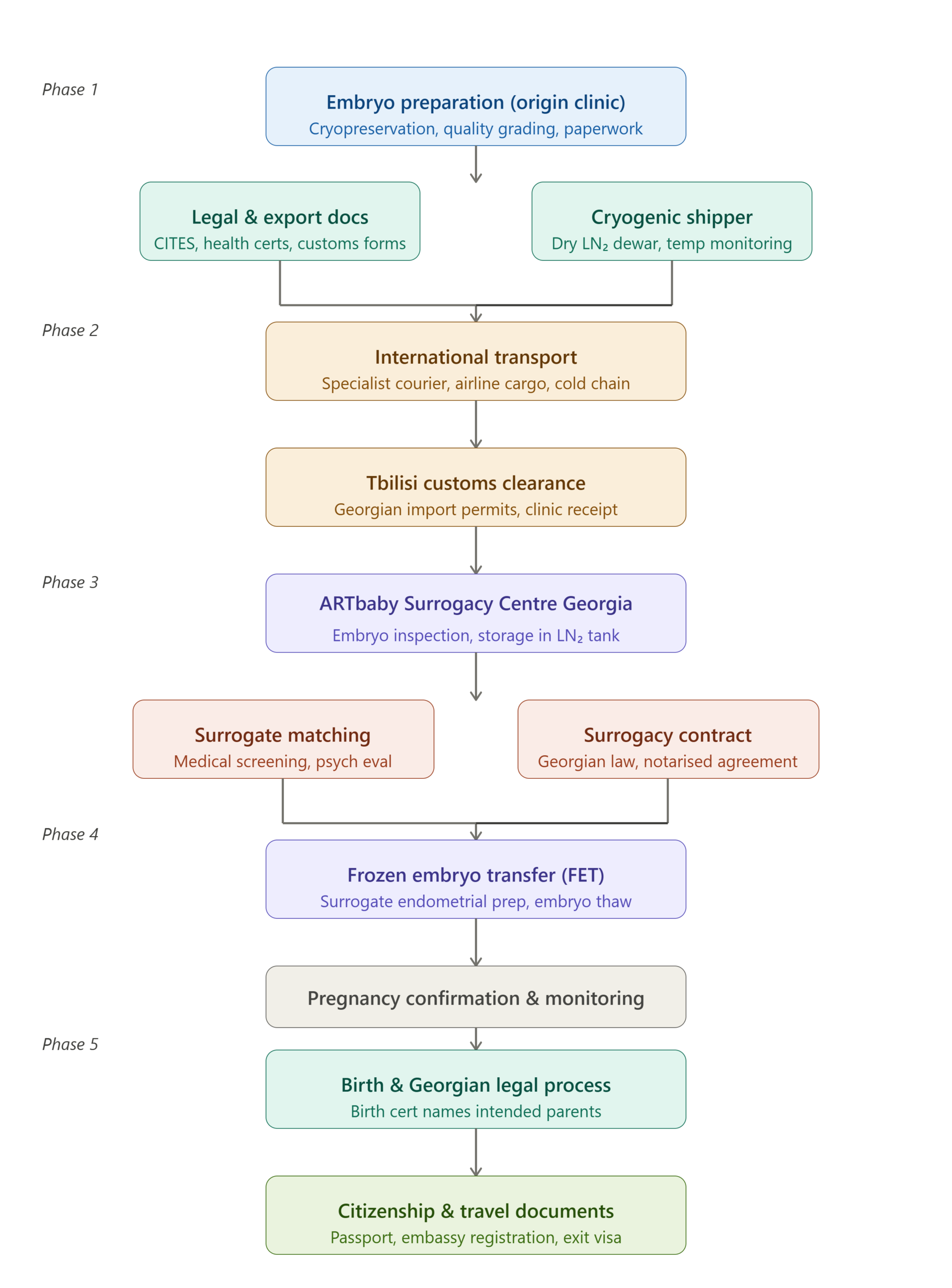
At Surrogacy Centre Georgia, international patients receive guidance throughout the embryo shipping process, including medical coordination, legal documentation, and communication with partner fertility laboratories.
What Is Embryo Shipping?
Embryo shipping refers to the transportation of cryopreserved (frozen) embryos from one IVF clinic to another using a highly controlled cryogenic system.
Embryos are typically frozen through vitrification, an advanced rapid-freezing technique that helps preserve embryo quality during long-term storage and transport.
Embryo shipping may be required when:
- Intended parents create embryos in their home country
- Surrogacy treatment is planned in another country
- Patients relocate internationally
- Donor embryos are transferred between fertility centers
- A surrogate is receiving treatment abroad
For many international couples, embryo transport allows them to continue fertility treatment without repeating ovarian stimulation or IVF cycles.
Why Georgia Is Becoming a Popular Destination for International Surrogacy
Georgia, located at the crossroads of Eastern Europe and West Asia and generally considered part of Europe, has become a preferred destination for international surrogacy due to:
- Supportive surrogacy laws
- Advanced IVF laboratories
- Affordable fertility treatment
- Experienced reproductive specialists
- International patient support systems
- Availability of gestational surrogacy programs
Many intended parents choose to create embryos in countries such as India, the UAE, the UK, Australia, or the United States and safely transport them to Georgia for embryo transfer into a surrogate.
How Embryo Shipping Works Safely
1. Medical Evaluation and Coordination
The process begins with coordination between the originating fertility clinic and the receiving IVF center in Georgia.
Specialists review:
- Embryo freezing reports
- Embryo grading details
- Infectious disease screening
- Consent forms
- Cryopreservation protocols
- Legal documentation
This ensures compatibility between laboratory systems and compliance with international reproductive regulations.
2. Legal Documentation and Patient Consent
International embryo transport requires multiple legal and medical documents, including:
- Ownership consent forms
- Embryo release authorization
- Passport copies
- Medical records
- Shipping agreements
- Import/export permissions (where applicable)
Different countries have different reproductive tissue transport regulations. Working with experienced fertility coordinators helps avoid delays and compliance issues.
3. Cryogenic Shipping Technology
Frozen embryos are transported using specialized cryogenic containers called dry shippers.
These containers:
- Maintain ultra-low temperatures around -196°C
- Use liquid nitrogen vapor technology
- Preserve embryo stability for several days
- Include temperature monitoring systems
- Reduce risk during international transit
Modern dry shippers are validated for medical reproductive transport and comply with international aviation safety standards.
4. International Courier and Chain of Custody
Embryos are transported through licensed medical logistics companies experienced in reproductive tissue handling.
Safety measures include:
- Continuous shipment tracking
- Tamper-proof documentation
- Chain-of-custody verification
- Real-time monitoring
- Customs clearance support
- Emergency contingency planning
Professional fertility shipping companies coordinate closely with airlines and customs authorities to minimize transit interruptions.
5. Arrival at the IVF Laboratory in Georgia
Once embryos arrive in Georgia, embryologists immediately inspect:
- Container temperature integrity
- Shipment condition
- Embryo labeling
- Cryostorage documentation
The embryos are then transferred into long-term liquid nitrogen storage until the surrogate’s embryo transfer cycle is scheduled.
Is Embryo Shipping Safe?
With modern vitrification and cryogenic transport systems, embryo shipping is considered highly safe when managed by experienced fertility centers and licensed medical couriers.
Key factors contributing to safety include:
- Advanced freezing technology
- Stable ultra-low temperatures
- Professional laboratory handling
- Strict identification protocols
- International transport monitoring systems
Studies show that properly vitrified embryos generally maintain excellent survival rates after thawing when transported under controlled conditions.
Who May Need an International Embryo Ship?
Embryo shipping may benefit:
Intended Parents Pursuing Surrogacy
Couples may create embryos in their home country and transfer them to Georgia for gestational surrogacy treatment.
Cancer Survivors
Patients who preserved embryos before cancer treatment may later use them internationally.
Couples Seeking Specialized IVF Care
Some patients choose advanced fertility laboratories abroad while continuing treatment in another country.
LGBTQ+ Intended Parents
International embryo transport often supports cross-border family-building journeys.
Important Considerations before Shipping Embryos
Before beginning international embryo transport, intended parents should discuss:
Legal Regulations
Each country has different laws regarding embryo export, surrogacy, and reproductive tissue transfer.
Clinic Accreditation
Choose fertility centers experienced in international IVF coordination.
Storage Compatibility
Laboratories should use compatible cryopreservation systems and protocols.
Shipping Insurance
Some medical courier providers offer shipment protection plans for added security.
Timeline Planning
Customs procedures and medical scheduling may affect transport timelines.
Visa and Travel Considerations for Intended Parents
Although embryos can travel independently through licensed medical couriers, intended parents may still need to visit Georgia during:
- Surrogacy agreement procedures
- Medical consultations
- Birth registration
- Newborn passport documentation
- Parentage formalities
Georgia remains accessible for many international patients due to relatively straightforward travel procedures and a growing medical tourism infrastructure.
Patients are encouraged to review updated embassy and immigration requirements before travel.
The Role of Fertility Clinics in Safe Embryo Transport
Experienced fertility centers play a major role in minimizing risks during embryo shipping by:
- Coordinating directly with IVF laboratories
- Reviewing documentation accuracy
- Working with trusted logistics providers
- Ensuring regulatory compliance
- Monitoring embryo handling procedures
At Surrogacy Centre Georgia, international coordination teams help intended parents navigate every stage of the process with medical transparency and logistical support.
The Future of International IVF and Embryo Transport
As global fertility care expands, embryo shipping is becoming more efficient, regulated, and technologically advanced.
Emerging developments include:
- AI-assisted cryostorage monitoring
- Automated tracking systems
- Improved vitrification methods
- Faster customs processing for medical shipments
- Greater international collaboration between fertility centers
These innovations are helping intended parents pursue cross-border IVF and surrogacy with greater confidence and safety.
Final Thoughts
Embryo shipping has become an essential part of modern international fertility treatment. With advanced cryogenic technology, experienced IVF laboratories, and professional logistics coordination, frozen embryos can now be transported safely across countries while maintaining high viability.
For intended parents considering IVF or surrogacy in Georgia, understanding the embryo transport process helps reduce uncertainty and supports better treatment planning.
Working with experienced fertility specialists and internationally coordinated clinics can make the journey smoother, safer, and more transparent from start to finish.

Ravi Sharma is a self-motivated, successful entrepreneur and has a solid experience in the fertility segment. and he is the director at ARTbaby Global (ARThealthcare). He is a pharmacy graduate with post-graduation in business administration and has 14 years of rich experience in the field of infertility segment. He loves to write about IVF, Surrogacy, and other ART (assisted reproductive technology) news, issues, and updates. He is a Pharmacy graduate (B. Pharm) and M.B.A (marketing).
His most recent success includes the successful launch of the medical tourism company, ARTbaby, which offers treatment options for infertility, egg donation, and surrogacy. He likes spending time with his family and writing about various aspects of IVF surrogacy and donating eggs.