
A positive pregnancy test after IVF and embryo transfer can feel like the culmination of a long fertility journey. For intended parents using gestational surrogacy, however, pregnancy still carries biological uncertainties, including the possibility of miscarriage.
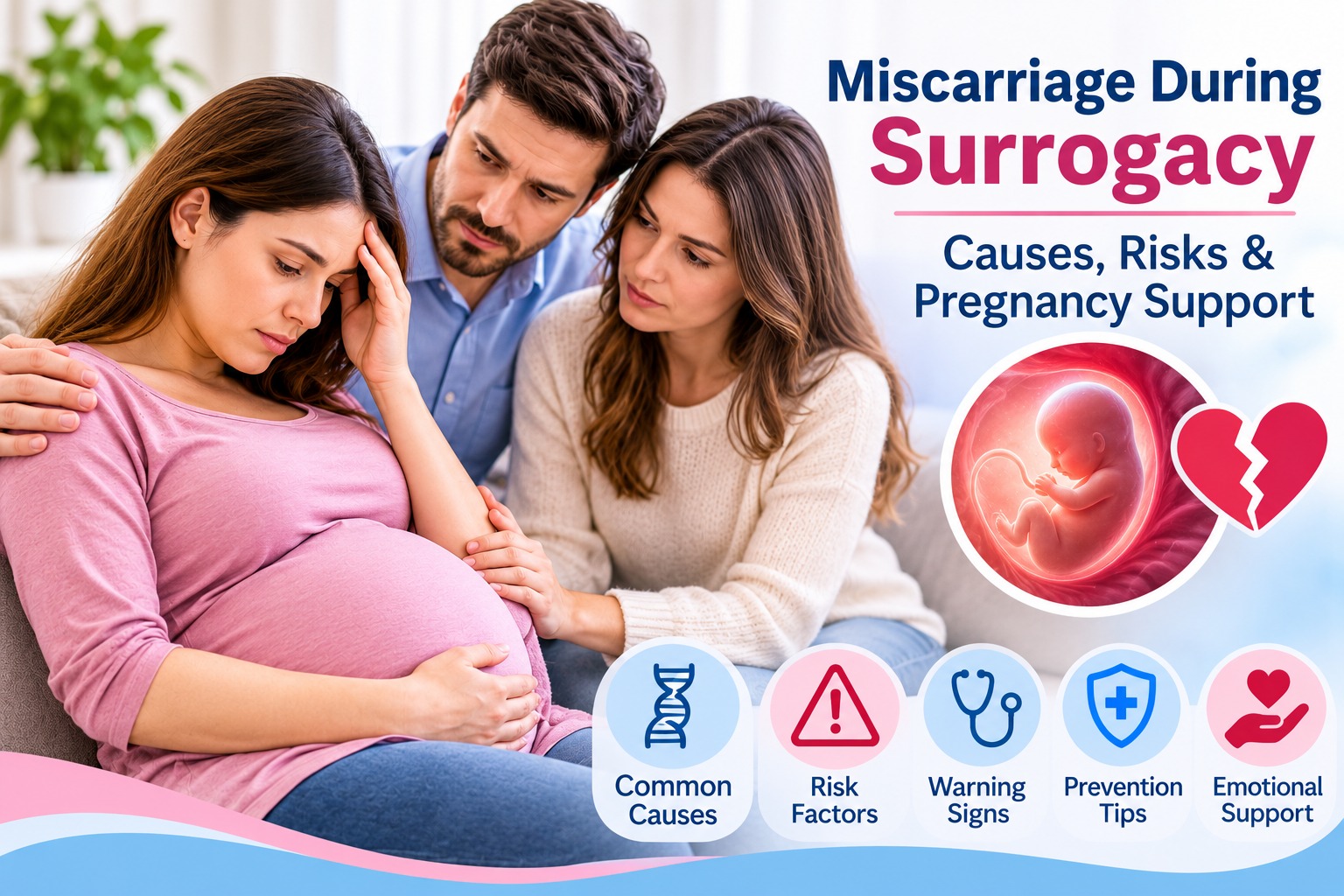
When miscarriage occurs, intended parents may experience shock, grief, confusion,n and guilt. They may wonder whether something went wrong with the embryo, the gestational carrier, the IVF procedure, re or pregnancy care.
The important point is that miscarriage is usually not caused by something the intended parents or gestational carrier did or failed to do. Chromosomal abnormalities are among the most common causes of early pregnancy loss.
For international intended parents, knowing how miscarriage is managed medically, emotionally,lly and practically can make an unexpected situation easier to navigate.
What Is Miscarriage During Surrogacy?
In gestational surrogacy, an embryo created using the intended parents’ and/or donor gametes is transferred to the uterus of a gestational carrier. The carrier carries the pregnancy but does not provide the egg.
Biologically, a miscarriage during surrogacy is not fundamentally different from miscarriage in another pregnancy. Early pregnancy loss generally refers to loss during the first trimester. ACOG reports that early pregnancy loss occurs in about 10% of clinically recognized pregnancies, with approximately 80% occurring during the first trimester.
Common Causes of Miscarriage During Surrogacy
There is rarely one identifiable cause. Several factors may contribute, while sometimes no definite explanation can be found.
- Chromosomal abnormalities
Chromosomal abnormalities are among the leading causes of early miscarriage. An embryo may have an abnormal number of chromosomes, which affects normal development.
ACOG estimates that approximately half of early pregnancy losses are associated with fetal chromosomal abnormalities. The 2026 ASRM guidance also identifies whole-chromosome aneuploidy as the most commonly identified cause of sporadic and recurrent miscarriage.
Therefore, miscarriage does not automatically indicate an error during embryo transfer or a problem with the gestational carrier.
- Embryo-related factors
An embryo may look healthy based on morphology but still have developmental limitations. Embryo grading cannot guarantee implantation, normal development, or a live birth.
Likewise, even when genetic testing has been performed, pregnancy loss remains possible. Genetic testing can provide useful information in selected cases but cannot guarantee a healthy pregnancy.
- Uterine or endometrial factors
The uterine environment plays an important role in implantation and pregnancy development. Potential factors include:
- Uterine structural abnormalities
- Certain fibroids
- Intrauterine adhesions
- Endometrial abnormalities
- Some congenital uterine anomalies
This is why appropriate medical and uterine evaluation is an important part of gestational carrier screening.
- Maternal health conditions
Certain health conditions in the gestational carrier may require careful assessment and management, including:
- Poorly controlled diabetes
- Thyroid disorders
- Certain autoimmune diseases
- Antiphospholipid syndrome (APS)
- Significant hypertension
- Certain infections
Having a medical condition does not automatically prevent a woman from safely carrying a pregnancy. Appropriate evaluation, treatment, and control are what matter.
- Age and lifestyle factors
Miscarriage risk generally increases with maternal age, largely because chromosomal abnormalities become more common. In gestational surrogacy, the age of the gestational carrier and the age of the egg source are separate considerations.
Smoking, excessive alcohol use, and significant underweight or overweight may also affect pregnancy risks. However, intended parents should avoid blaming an isolated activity or event. Routine activities such as working, exercising, sexual intercourse,e or ordinary emotional stress do not generally cause early miscarriage.
What Are the Warning Signs?
Possible symptoms include:
- Vaginal bleeding or spotting
- Abdominal or pelvic cramping
- Passage of tissue or fluid
- Reduction in pregnancy symptoms
- Sometimes, no symptoms at all
Bleeding does not necessarily mean miscarriage. Diagnosis requires medical assessment, which may include ultrasound and, when appropriate, serial β-hCG testing.
What Happens When Miscarriage Is Suspected?
The health and safety of the gestational carrier comes first.
The medical team may perform:
- Clinical assessment of bleeding, pain, and vital signs
- Ultrasound examination
- β-hCG testing when appropriate
- Confirmation of pregnancy loss
- Assessment for complications such as heavy bleeding or infection
- Discussion of management options
After confirmed miscarriage, management may involve expectant care, medication or a surgical procedure, depending on the clinical situation.
What Should Intended Parents Do After a Miscarriage?
The first question is often, “Why did this happen?” Unfortunately, an immediate answer may not always be possible. A responsible medical team should clearly explain what is known, what remains uncertain, and whether anything can be learned for a future attempt.
First, focus on the carrier’s health.
The gestational carrier’s medical care should remain the immediate priority. ASRM emphasizes the carrier’s autonomy in medical decisions during pregnancy and aftercare. Intended parents should receive appropriate updates while respecting her privacy and consent.
Then consider whether further evaluation is needed
A single early miscarriage does not necessarily require extensive testing. If pregnancy loss is recurrent or clinically indicated, evaluation may include:
- Genetic assessment of pregnancy-loss tissue where appropriate
- Uterine anatomy
- Thyroid function
- Diabetes or metabolic factors
- Antiphospholipid syndrome in appropriate cases
- Other factors based on medical history
Testing should be individualized rather than performed automatically after every miscarriage.
When Intended Parents Live Abroad
International surrogacy can make pregnancy complications more difficult to manage emotionally and practically. Intended parents may be unable to reach the carrier quickly and may be unfamiliar with the local healthcare system. A well-organized program should have clear arrangements for:
- Emergency communication
- Local obstetric care
- Medical reports and records
- Translation support where needed
- Fertility-specialist follow-up
- Psychological support
- Relevant legal and administrative guidance
Cross-border reproductive care can involve additional medical, ethical, legal, and logistical considerations.
What you should know about surrogacy destination Georgia?
For international intended parents considering surrogacy in Georgia, medical and legal planning should be considered separately.
Georgia’s Law on Health Care, including Article 143, provides for IVF and describes circumstances involving transfer of an embryo to another woman to carry the pregnancy. Article 144 also addresses cryopreserved gametes and embryos.
Because cross-border parentage, documentation, nationality, travel and administrative requirements can depend on individual circumstances and may change, intended parents should obtain independent legal advice appropriate to their nationality before treatment begins.
Read More: Surrogacy Law in Georgia
Read Related: Surrogacy law current Status in Georgia
Does One Miscarriage Mean the Next Attempt Will Fail?
No. A single miscarriage does not mean that another embryo transfer will necessarily result in pregnancy loss. Many miscarriages occur as isolated events. Repeated losses, however, warrant a more structured medical evaluation.
The timing of another transfer should also be individualized. The fertility specialist may consider the carrier’s physical recovery, resolution of bleeding or infection, uterine recovery, investigation results, and emotional readiness before recommending another attempt.
The Emotional Impact of Miscarriage During Surrogacy
Miscarriage can be emotionally complicated for everyone involved.
Intended parents may experience:
- Grief and sadness
- Guilt or self-blame
- Anxiety about remaining embryos
- Fear of another loss
- Financial and travel-related stress
- Helplessness because of geographical distance
The gestational carrier may also experience emotional distress alongside physical recovery. Both experiences deserve recognition and support.
ASRM recommends psychological evaluation and access to counseling for gestational carriers and emphasizes psychosocial education and counseling for intended parents.
What Should Intended Parents Ask Before Starting?
Before beginning a surrogacy journey, ask the clinic or program:
- How are gestational carriers medically screened?
- Is the uterine cavity evaluated before embryo transfer?
- How is pregnancy monitored after a positive test?
- What emergency obstetric care is available locally?
- How will intended parents be informed about complications?
- What happens if miscarriage occurs?
- When is genetic testing of pregnancy-loss tissue considered?
- Is psychological support available?
- How are medical records shared internationally?
- What legal support is available for cross-border matters?
A Compassionate Approach Matters
A miscarriage during surrogacy is a painful setback, but it should not automatically be viewed as a failure of the gestational carrier, fertility team, IVF laboratory, or intended parents.
Pregnancy remains biologically complex, even when embryos are carefully selected, and gestational carriers are appropriately screened.
When pregnancy loss occurs, the best approach combines compassion, medical evaluation, transparent communication, and individualized planning.
For international intended parents, choosing a surrogacy program should therefore involve more than looking at pregnancy or birth statistics. Understanding how a program manages complications and supports both the gestational carrier and intended parents when circumstances change is equally important.
At Surrogacy Centre Georgia, prospective intended parents can discuss their medical history, embryo options, gestational-carrier screening, pregnancy monitoring, and the practical aspects of an international surrogacy journey with appropriate clinical and legal professionals.

Ravi Sharma is a self-motivated, successful entrepreneur and has a solid experience in the fertility segment. and he is the director at ARTbaby Global (ARThealthcare). He is a pharmacy graduate with post-graduation in business administration and has 14 years of rich experience in the field of infertility segment. He loves to write about IVF, Surrogacy, and other ART (assisted reproductive technology) news, issues, and updates. He is a Pharmacy graduate (B. Pharm) and M.B.A (marketing).
His most recent success includes the successful launch of the medical tourism company, ARTbaby, which offers treatment options for infertility, egg donation, and surrogacy. He likes spending time with his family and writing about various aspects of IVF surrogacy and donating eggs.
 Reviewed by Dr. Nita Sharma Das (Ph.D., ND., PHDHM., B.Pharm) - Master of Business Administration (MBA), B.pharma, Naturopathic Medicine/Naturopathy, PhD in Alternative Medicine,, HSPCResearcher and Innovator in Breakthrough Cosmeceuticals & Neutraceuticals | Patent Granted for Anti-Aging Formula | Author | Columnist | Advocate for Holistic Beauty | Former Asso.Prof. in Pharmaceutical Sciences