
For many intended parents, surrogacy begins with a deeply personal hope: to finally build the family they have been waiting for. For a gestational carrier, the decision involves something equally significant, the physical and emotional experience of carrying a pregnancy for another family.
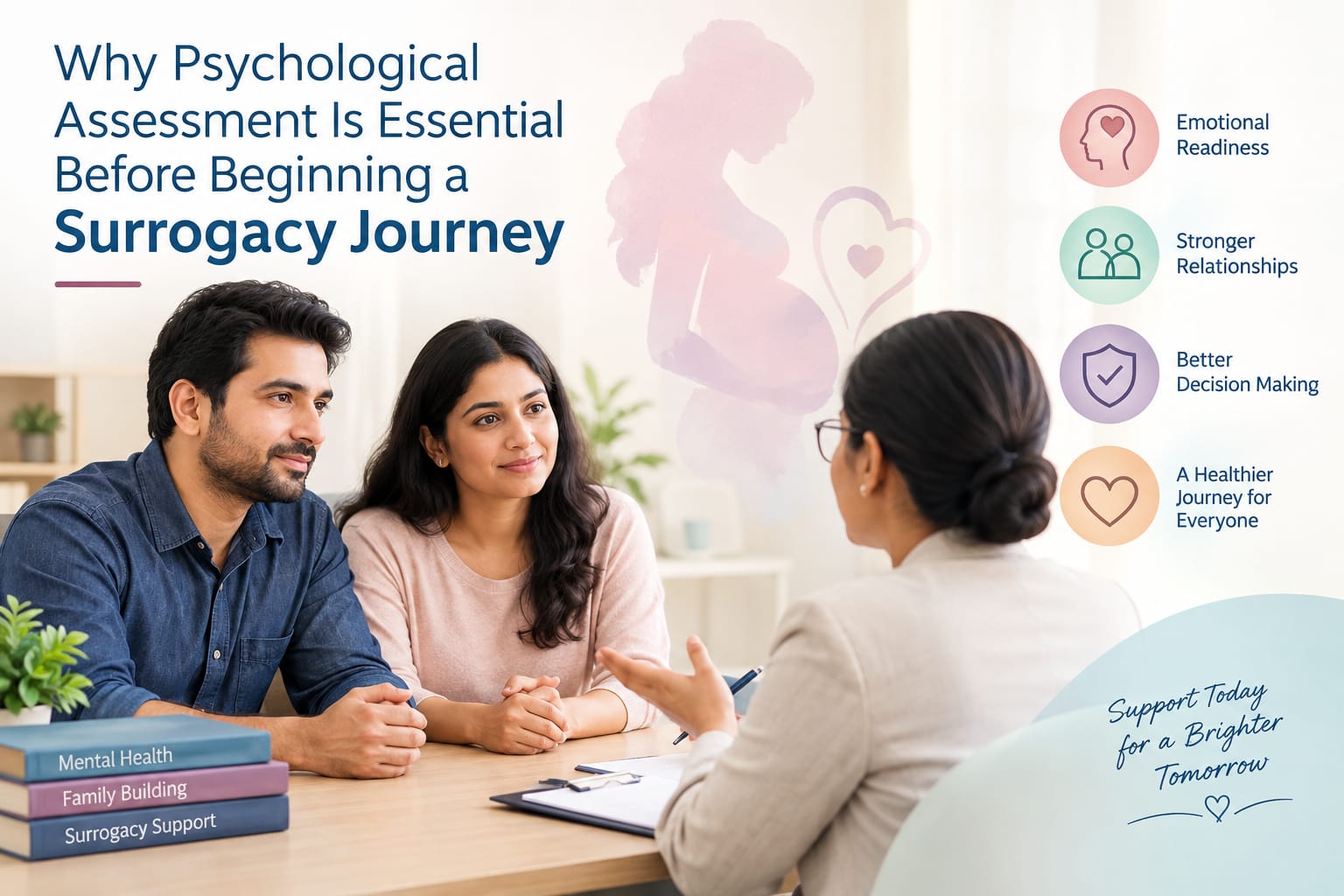
Medical screening is therefore only one part of preparing for a surrogacy journey. Psychological assessment and counseling can help intended parents and gestational carriers understand the emotional, practical and interpersonal aspects of the process before pregnancy begins.
International professional guidance recognizes psychosocial evaluation and counseling as important components of gestational-carrier care. The American Society for Reproductive Medicine (ASRM), for example, includes psychosocial evaluation and counseling among the recommended areas of gestational-carrier screening and counseling.
For international surrogacy, where people may also be navigating different languages, cultures, healthcare systems and legal environments, this preparation can become even more important.
What Is Psychological Assessment in Surrogacy?
Psychological assessment is not a test designed simply to decide whether someone is “good enough” for surrogacy.
Its purpose is to assess whether the participant understands the process, has realistic expectations and has adequate emotional and social support to navigate pregnancy and the potential challenges associated with third-party reproduction.
A qualified mental-health professional may explore:
- Understanding of the surrogacy process
- Motivation for becoming a gestational carrier
- Expectations regarding pregnancy and birth
- Understanding of the intended parents’ role
- Emotional preparedness for handing over the baby
- Previous pregnancy or fertility experiences
- Relationship and family support
- Coping mechanisms and stress management
- Expectations regarding communication during pregnancy
- Potential concerns about medical complications
- Understanding of informed consent and personal autonomy
The assessment should be conducted confidentially and respectfully, with appropriate attention to the individual’s rights and wellbeing.
Why Is Psychological Screening Important?
1. It Helps Establish Realistic Expectations
Surrogacy involves multiple people with different emotional perspectives.
Intended parents may experience excitement, anxiety and fear after years of infertility. A surrogate may feel proud about helping another family while also experiencing the ordinary emotional changes associated with pregnancy.
Psychological counseling can help everyone distinguish expectations from assumptions.
For example, intended parents may have questions about how closely they should communicate with the surrogate. The surrogate may have her own preferences regarding appointments, communication and privacy.
Discussing these matters early can reduce misunderstandings later.
2. It Prepares the Gestational Carrier for Pregnancy
Pregnancy itself can be emotionally demanding, even when the pregnancy is medically uncomplicated.
A gestational carrier may experience:
- Anxiety about pregnancy outcomes
- Concerns about medical procedures
- Emotional changes during pregnancy
- Worries about complications
- Stress related to communication with intended parents
- Feelings surrounding delivery and postpartum recovery
Psychological preparation does not eliminate these experiences. Instead, it can provide strategies for recognizing and managing them.
3. It Helps Intended Parents Prepare Emotionally
Psychological support should not focus exclusively on the surrogate.
Intended parents may be dealing with years of infertility, previous pregnancy loss, unsuccessful IVF cycles or significant anxiety about whether the surrogacy journey will succeed.
They may also experience a different form of emotional uncertainty during pregnancy because someone else is carrying their baby.
Counseling can help intended parents develop realistic expectations and coping strategies before the pregnancy begins.
Psychological Assessment Is Not About Finding “Perfect” People
One important distinction is that psychological screening should not be confused with searching for a person who will never experience stress, sadness or anxiety.
Pregnancy is unpredictable, and emotional responses can change.
The objective is to identify potential concerns, clarify expectations and determine whether additional counseling or support would be helpful.
Professional recommendations emphasize informed counseling and evaluation rather than simply labeling people as psychologically “eligible” or “ineligible.”
What Should Be Discussed Before Embryo Transfer?
A thorough preparation process can address several practical issues.
Communication
Questions may include:
- How frequently should the surrogate and intended parents communicate?
- Who should attend medical appointments?
- How will important medical decisions be communicated?
- What happens if communication becomes difficult?
Pregnancy and Medical Decisions
The surrogate remains the person experiencing the pregnancy and should understand her medical rights and responsibilities.
The intended parents and clinical team should have clear expectations about medical communication while respecting the surrogate’s autonomy.
Birth and Postpartum Period
The period surrounding delivery deserves particular attention.
Before pregnancy, participants can discuss expectations about:
- Birth attendance
- Hospital communication
- Immediate post-birth contact
- Newborn care arrangements
- Postpartum communication
- Emotional support after delivery
These discussions should be handled sensitively and within the applicable legal framework.
The Special Considerations of International Surrogacy
International intended parents may travel thousands of kilometers to pursue fertility treatment and surrogacy.
For them, psychological preparation may include issues beyond the pregnancy itself.
Cultural differences
Communication styles, family expectations and attitudes toward pregnancy can vary considerably between countries.
Language barriers
Important medical and legal information should be understood clearly. Professional interpretation may be appropriate when required.
Distance from home
Intended parents may spend extended periods away from their normal support networks.
Uncertainty about timelines
Treatment schedules can change because of IVF response, pregnancy monitoring, delivery or administrative procedures.
Emotional pressure
International journeys can involve considerable financial, logistical and emotional investment. Counseling can help couples prepare for uncertainty rather than expecting the process to follow a perfectly predictable timeline.
ESHRE’s psychology and counseling resources recognize the importance of psychological support in reproductive medicine, including situations involving cross-border reproductive care.
Supporting the Surrogate throughout Pregnancy
Psychological care should not end once the embryo transfer is completed.
A supportive surrogacy program should consider emotional wellbeing throughout the pregnancy.
Depending on individual needs, support may include:
- Regular check-ins
- Access to qualified counseling
- Support during stressful medical events
- Assistance with communication concerns
- Postpartum psychological support when needed
This is particularly important because pregnancy can involve unexpected complications, changes in expectations or emotional distress.
What Does Research Tell Us?
Evidence does not suggest that surrogacy inherently leads to poor psychological outcomes for everyone involved.
A systematic review published in Human Reproduction Update examined outcomes for surrogate mothers, children and families and reported no major psychological differences compared with other assisted-reproduction or naturally conceived families in the available evidence. However, research remains limited in some areas, particularly across different legal and cultural environments.
Research has also highlighted the importance of relationships and communication between surrogates and intended parents.
This supports a key principle: ethical surrogacy is not simply about completing a medical procedure; it is about creating a well-supported process for everyone involved.
Psychological Preparation and the Surrogacy Journey in Georgia
For international intended parents considering surrogacy in Georgia, psychological preparation should form part of a broader multidisciplinary process that includes medical evaluation, informed consent and independent legal guidance.
Georgia’s healthcare legislation recognizes reproductive rights within the country’s legal framework, but the legal aspects of an international surrogacy arrangement can be complex and should be assessed according to the circumstances of the intended parents and applicable law.
A reputable program should therefore avoid presenting psychological screening as a simple administrative formality.
Instead, it should be part of a patient-centered approach that protects informed decision-making, emotional wellbeing and clear communication.
A Successful Surrogacy Journey Is More Than a Successful Pregnancy
The ultimate goal of surrogacy is not simply achieving a positive pregnancy test.
A well-prepared journey should aim for:
- Medically appropriate care
- Informed consent
- Respect for the surrogate’s autonomy
- Realistic expectations
- Clear communication
- Appropriate psychological support
- Legal clarity
- Protection of the child’s interests
- Compassionate care for everyone involved
For intended parents travelling internationally, choosing a programme that recognizes these principles can provide greater confidence throughout an emotionally complex journey.
Final Thoughts
Surrogacy brings together medicine, psychology, law and human relationships. Psychological assessment provides an opportunity to address the emotional side of that equation before pregnancy begins, when expectations can be discussed openly and concerns can be addressed proactively.
For both gestational carriers and international intended parents, the strongest foundation is not simply optimism it is preparation, transparency, informed consent and ongoing support.
Read Also: Surrogate care
Surrogacy Centre Georgia can help international intended parents understand the different stages of their fertility and surrogacy journey, while appropriate medical, psychological and legal professionals should remain involved according to the individual’s circumstances.
Disclaimer
This article is intended for general educational purposes and does not constitute psychological, medical or legal advice. Psychological assessment requirements and surrogacy laws vary between countries and individual cases. International intended parents and gestational carriers should obtain advice from appropriately qualified medical, mental-health and independent legal professionals before proceeding with a surrogacy arrangement. No psychological assessment can guarantee a particular pregnancy or surrogacy outcome.

Ravi Sharma is a self-motivated, successful entrepreneur and has a solid experience in the fertility segment. and he is the director at ARTbaby Global (ARThealthcare). He is a pharmacy graduate with post-graduation in business administration and has 14 years of rich experience in the field of infertility segment. He loves to write about IVF, Surrogacy, and other ART (assisted reproductive technology) news, issues, and updates. He is a Pharmacy graduate (B. Pharm) and M.B.A (marketing).
His most recent success includes the successful launch of the medical tourism company, ARTbaby, which offers treatment options for infertility, egg donation, and surrogacy. He likes spending time with his family and writing about various aspects of IVF surrogacy and donating eggs.